Landscape design
Frangipani: the tree that signs our gardens
If there is one tree we recognise from afar as part of one of our gardens, it is the frangipani. It is present in many of the projects we sign and, now in October, its most beautiful moment begins: with the first rains, branches that spent the winter bare sprout again and cover themselves in fragrant flowers that last until the end of summer. It is a tree that changes with the year, and that is exactly why we love it.
Sculpture in winter, fragrance in summer
Frangipani (Plumeria, called jasmim-manga in Brazil) comes from tropical America and has adapted very well to the climate of inland São Paulo. In the dry season it drops its leaves and reveals the architecture of its branches: thick, smooth, opening in forks that draw a canopy like a candelabrum. It remains beautiful even without leaves, and that matters in a project, because a garden needs presence in July too.
When the rains return, broad leaves appear at the tips of the branches and the flowers follow soon after, in clusters, in white with a yellow centre, pink or red. The fragrance is striking, especially in the late afternoon. It is the kind of detail that transforms the experience of being in a garden and lies at the heart of what we call biophilic architecture: a space that speaks to all the senses, not only to sight. We write more about this in our article on the benefits of biophilia.
Made for the heat of Ribeirão Preto
Frangipani loves full sun and heat. Its fleshy branches store water, and dropping its leaves in the dry season is the plant's strategy to get through the drought without suffering. Once established, it needs little watering. What it does not accept is waterlogging: roots in soil that is too wet will rot. That is why, in our projects, it always goes to a well-drained spot, with soil prepared to let water run off. It is one of the trees that best suits the strategy we describe in gardens built for heat.
Where it works best
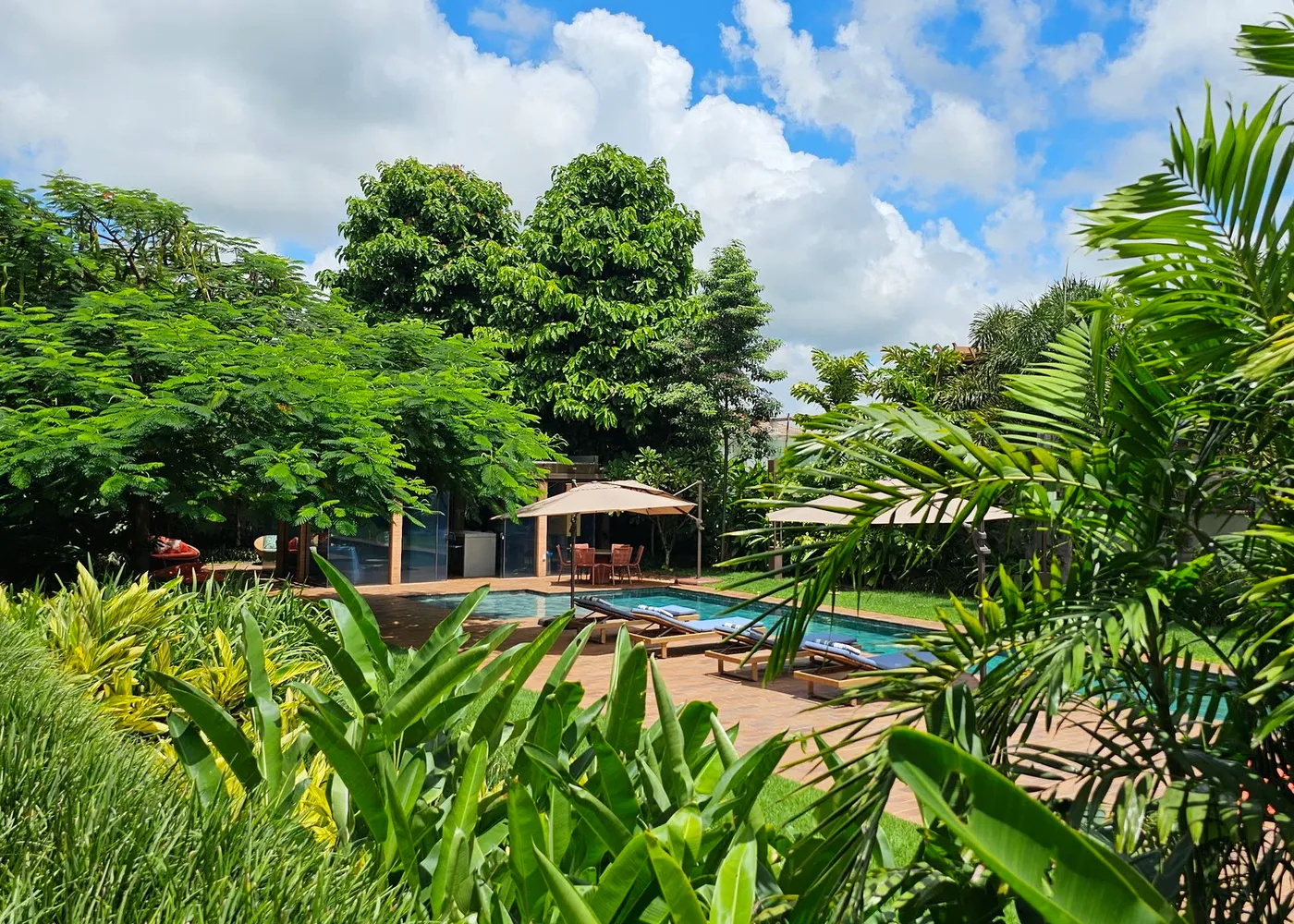
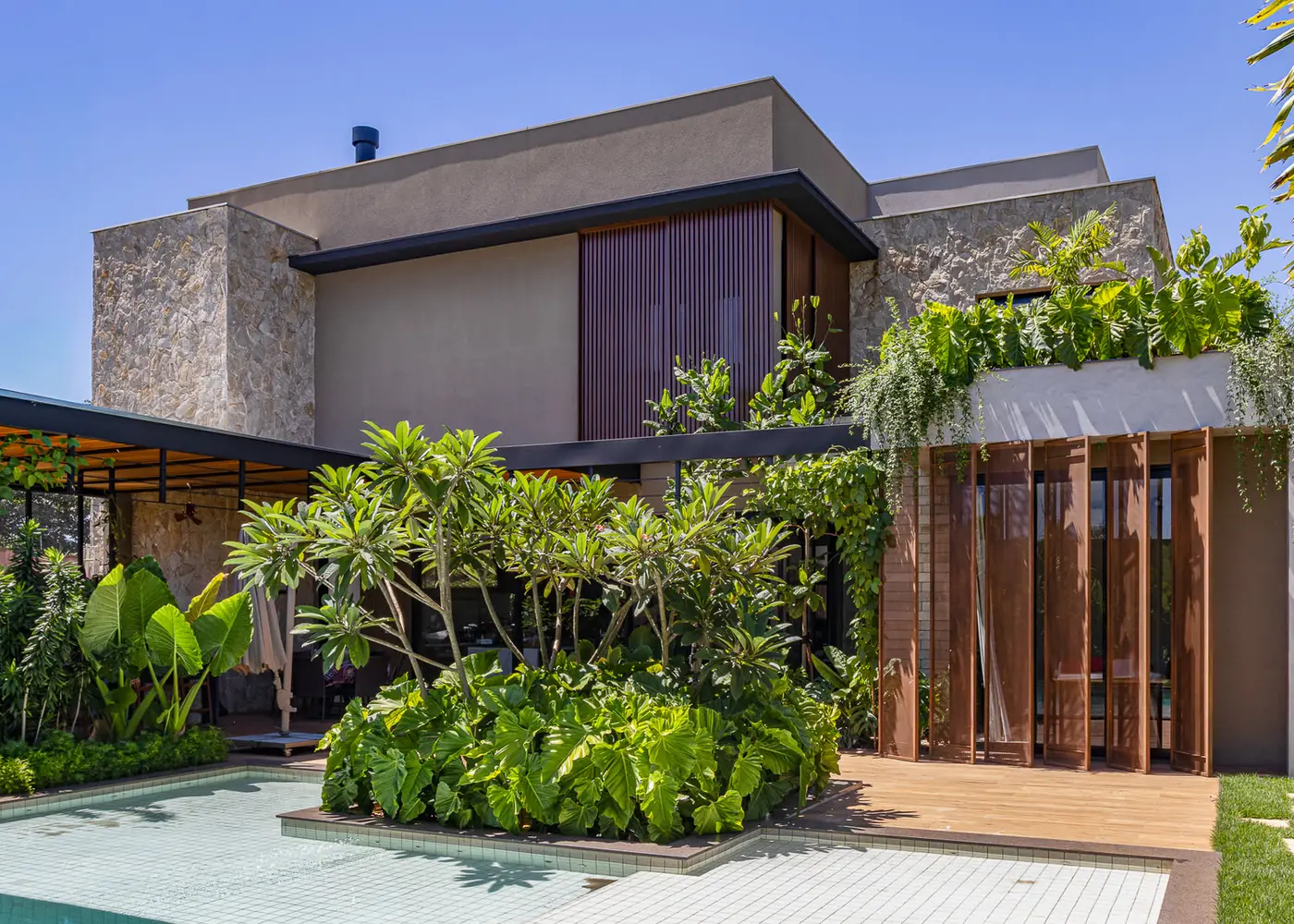
Because it is small to medium in size and its roots do not usually damage paving, frangipani fits where other trees would not: beside the pool, in inner courtyards, in raised beds, next to decks and verandas. At Bunganvile, a cluster of frangipanis fills an island beside the pool and casts light shade over the water. At Ipê Amarelo, the pink flowers appear in the foreground against the green of palms and ground cover.
It also works very well as a focal point. On its own, on a lawn or at the entrance of the house, it shows the shape of its canopy and marks the seasons; in groups, it forms a mass of flowers and fragrance you can sense from a distance. In large, well-drained pots, it takes the garden up to terraces and rooftops.
Care that makes a difference
Frangipani is easy to maintain, but a few things change the result. Pruning should be minimal and deliberate: each cut branch tends to split in two, and the natural shape of the canopy is its greatest beauty. When pruning is needed, the best time is the end of the dry season, before it sprouts again. The sap is milky and can irritate skin and eyes, so pruning calls for gloves. Feeding goes with the garden's annual review at the start of the rains, and watering should be moderate, always respecting drainage.
Falling flowers are part of the charm. Near the pool they ask for a little more cleaning during the flowering season, but leaf drop is concentrated in winter, outside swimming season, and those who choose frangipani usually find the trade more than worth it.
The right tree in the right place
Choosing frangipani, or any other tree, is a design decision: it depends on sun, soil, drainage, space and what you want to feel in that place. It is part of how we design each garden, and one of the elements we recognise as part of the Andréa Esteves Signature. If you want to plant now, taking advantage of the start of the rains, the project is the first step, whether in Ribeirão Preto or in the high-end landscape projects we sign across Brazil.
Frequently asked questions
When does frangipani flower?
In Ribeirão Preto and inland São Paulo, flowering begins with the first spring rains and lasts until the end of summer. In the dry winter, the tree drops its leaves and rests.
Why does frangipani lose its leaves in winter?
It is a natural adaptation to the dry season. Without leaves, the plant loses less water and gets through the drought using the reserves in its branches. When the rains return, it sprouts and flowers again.
Can frangipani be planted near a pool?
Yes, and it is one of our favourite uses. Its roots do not usually damage paving and it stays compact. During flowering, the blossoms that fall into the water need a little more cleaning.
Does frangipani need a lot of water?
No. Once established, it handles heat and drought well and needs moderate watering. The main care is drainage, because waterlogged soil rots the roots.
Can frangipani grow in a pot?
Yes, in large pots with good drainage. It is a good way to bring the tree to terraces, rooftops and generous verandas, as long as they get full sun.
Is frangipani sap harmful?
The milky sap can irritate skin and eyes. That is why pruning should be done with gloves, and direct contact with cut branches is best avoided.
Want a garden that changes with the seasons and perfumes the house? Let's talk about your project.
Chat on WhatsApp →